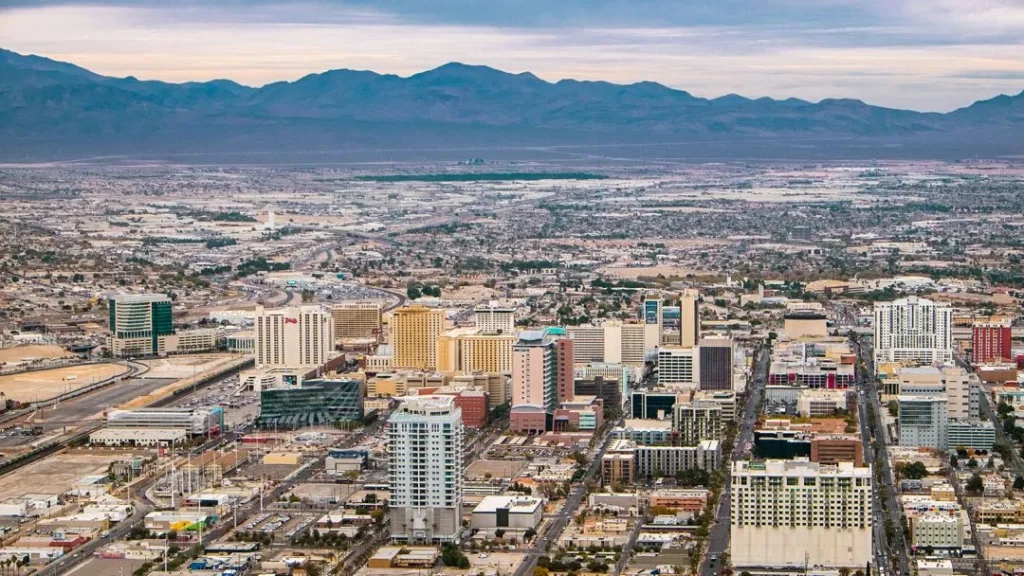
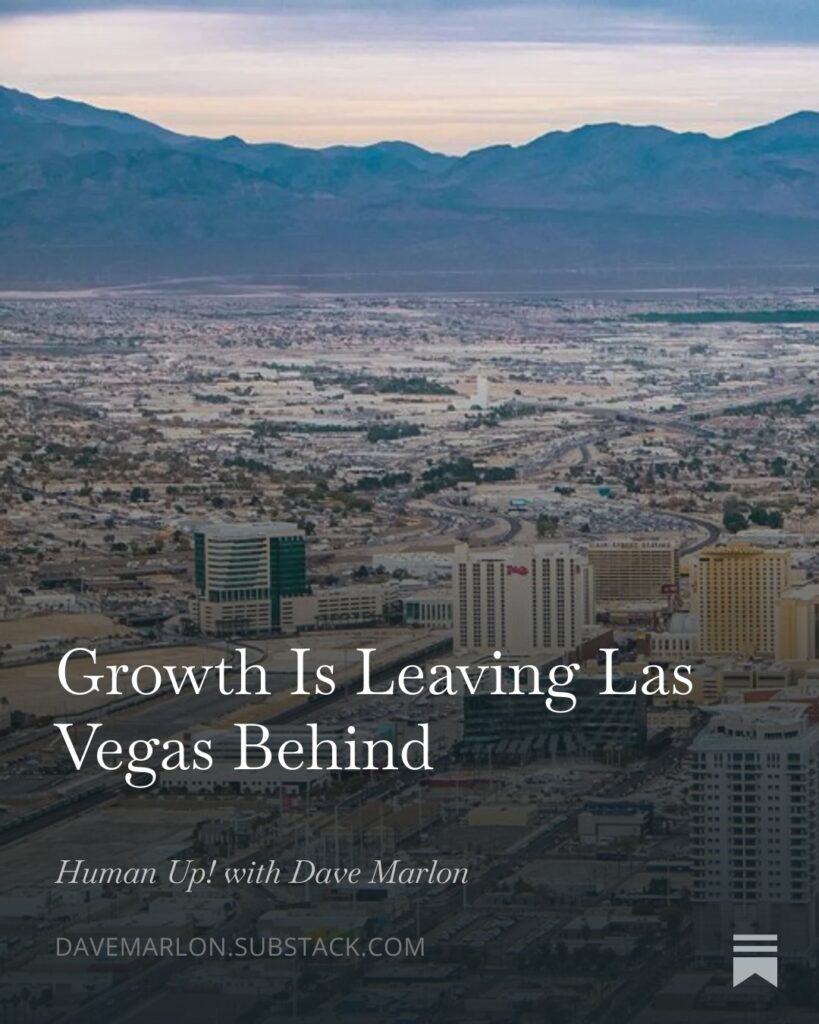
Southern Nevada is booming. That much is obvious. New residents continue to arrive, businesses are expanding, and capital is flowing into the region. The real question is not whether growth is happening. The question is where that growth is going, and right now, the answer should concern anyone who cares about the future of the City of Las Vegas.
Henderson and North Las Vegas have positioned themselves as places where development can happen efficiently and predictably. Builders understand the process, timelines are clearer, and local governments have created an environment that encourages investment rather than slowing it down. The results are visible across the valley. Henderson continues to expand, and North Las Vegas has aggressively attracted industrial and logistics investment, particularly in areas like Apex, which has become a magnet for large scale projects.
The City of Las Vegas has developed a very different reputation. Developers working within the city often encounter a process that feels slow, unpredictable, and unnecessarily complicated. Permitting can take longer than expected, resubmissions are common, and the rules can feel inconsistent depending on the project or the circumstances. Whether every criticism is fully deserved is not the point. What matters is that the perception exists, and in a competitive regional market, perception drives decisions.
Capital does not wait for cities to fix their processes. Developers build where they can operate with confidence. When timelines and costs become uncertain, projects do not disappear. They move. In Southern Nevada, that means crossing a municipal boundary into a jurisdiction that offers more clarity and less friction.
This shift has real consequences. When projects leave the City of Las Vegas, so do jobs, tax revenue, and long term economic opportunity for residents. Instead of building a stronger, denser urban core, the city is effectively pushing growth outward. Over time, that leads to a weaker economic base and fewer opportunities for the people who live in the city itself.
At the same time, Las Vegas is facing a growing employment challenge that is not getting nearly enough attention. The city ranks at or near the top in the country for urban unemployment rates. Roughly one in twenty people is out of work. That is not just a statistic. It represents a structural problem in how opportunity is being created and distributed.
For years, one of the most reliable pathways into the workforce for people trying to rebuild their lives came from logistics and warehouse jobs. Companies like Amazon were offering wages around $23 an hour, and those jobs made a real difference. They provided stability, income, and a way forward for people who might otherwise have been left behind. Many individuals coming off the streets or out of difficult circumstances were able to step into those roles and begin rebuilding their lives.
That pathway is now shrinking.
The same warehouses that once created thousands of jobs are becoming increasingly automated. Facilities that span one million square feet are now designed to operate with far fewer workers than they once required. Robotics, artificial intelligence, and advanced logistics systems are replacing roles that were once entry points into the workforce. This is not a future problem. It is already happening.
The implication is clear. At the exact moment when Las Vegas is struggling with high unemployment, one of its most accessible job pipelines is being reduced by technology. If the city is not actively attracting new industries and new forms of employment, the gap will only widen.
This is where development policy and economic reality intersect. If Las Vegas continues to make it difficult for projects to move forward within city limits, it is not just losing buildings. It is losing the opportunity to create jobs that could replace the ones being automated out of existence.
Historically, when the United States faced major economic shifts, it responded with large scale thinking. Massive infrastructure projects created jobs while also building long term capacity for growth. Those efforts required vision and a willingness to take on complexity, but they paid dividends for generations.
Today, that kind of thinking is largely absent at the local level. Instead of asking how to attract and enable the next wave of job creating investment, the conversation often gets stuck in process, delay, and incremental adjustments. Meanwhile, other cities within the same region are moving faster and capturing the benefits.
To be fair, the City of Las Vegas is dealing with real challenges. Managing a built urban environment is more complex than developing open land. Infrastructure constraints, neighborhood concerns, and the need to balance growth with quality of life are legitimate issues. Regulation is necessary, and no serious argument suggests otherwise.
The problem is not regulation itself. The problem is how it is implemented.
There is a difference between a system that is transparent, efficient, and predictable, and one that feels opaque and inconsistent. When developers believe that outcomes depend more on navigating the process than on meeting clear standards, confidence erodes. When confidence erodes, investment goes elsewhere.
That is exactly what is happening.
Henderson and North Las Vegas are not just growing because they are expanding geographically. They are growing because they have created systems that align with how capital actually behaves. They understand that developers need predictability, and they have built processes that provide it.
The City of Las Vegas has an opportunity to do the same, but time matters. The market does not pause while institutions figure themselves out. Every project that leaves the city is not just a missed opportunity in the moment. It is a long term loss of economic activity, employment, and tax base.
If Las Vegas wants to compete, it has to confront this reality directly. That means streamlining processes, creating clearer rules, and ensuring that development decisions are based on objective standards rather than uncertainty. It also means recognizing the urgency created by broader economic trends like automation, which are already reshaping the job market.
This is not about chasing growth for its own sake. It is about ensuring that the people who live in Las Vegas have access to opportunity in a changing economy.
Right now, too many of those opportunities are being created somewhere else.